Are you ready to secure your financial future? Discover the ins and outs of retirement savings accounts. By starting early and selecting the right plan, you can maximize your retirement savings. You may wonder which account suits you best—fear not. The following guide will help you make informed choices.
Understanding Retirement Accounts
Retirement accounts are crucial for building a secure future, ensuring you have adequate funds once you stop working. These accounts offer various benefits and are designed to encourage saving by providing tax advantages. It’s essential to understand the different types of retirement accounts to make the most out of your savings strategy. Each type has its unique features, contribution limits, and withdrawal rules, all of which impact your financial planning.
Traditional IRAs and Roth IRAs are popular options, each with distinct tax benefits. Contributions to Traditional IRAs may be tax-deductible depending on your income, which can reduce your taxable income in the year of contribution. However, withdrawals during retirement are taxed as regular income. Roth IRAs function inversely—contributions are made with after-tax dollars, and withdrawals during retirement are typically tax-free, provided certain conditions are met.
If you’re employed, your employer might offer a 401(k) plan, which allows you to contribute a portion of your paycheck directly into your retirement account. Many employers also match a portion of your contributions, which is essentially free money. Like Traditional IRAs, 401(k) contributions may reduce your taxable income, and taxes are applied upon withdrawal.
For self-employed individuals, options like a Solo 401(k) or a SEP IRA provide similar benefits, allowing higher contribution limits. Solo 401(k)s are flexible, enabling contributions as both the employer and employee, while SEP IRAs are easier to administer and allow for more significant contributions based on the business’s income.
Understanding these accounts can enhance your saving strategy, ensuring you optimize tax benefits and align your choices with your retirement goals. Carefully consider factors like your current tax rate, expected future tax rate, and desired retirement lifestyle when selecting the right retirement account.
Benefits of Starting Early
Starting early with your retirement savings can make a significant difference in the long run. By beginning your investment journey sooner, you allow compound interest to work its magic over time. Essentially, you earn interest not only on your initial contributions but also on the interest that accumulates over the years. This compounding effect can lead to exponential growth of your retirement funds.
Moreover, starting early gives you more time to ride out market fluctuations. The financial market often experiences ups and downs, and having a longer time horizon allows your investments to recover from temporary declines. You can afford to take calculated risks, potentially yielding higher returns as you have years to adjust your strategy.
Another advantage is that by starting early, you may be able to contribute smaller amounts regularly and still reach your retirement goals. This approach can ease financial stress as you won’t need to set aside large sums later in life. Regular contributions, even if modest, over time add up to a substantial nest egg.
Additionally, early starters have the flexibility to explore various account types to find the best fit for their financial goals. Whether it’s a 401(k), IRA, or Roth IRA, starting early allows for strategic planning and adjustments depending on your needs and career path. By maximizing these early years, you set a solid foundation for a secure and comfortable retirement.
Comparing Account Types
When considering different retirement savings accounts, it’s essential to understand how each type works alongside its benefits and limitations. There are generally three main types of accounts to consider: 401(k), Traditional IRA, and Roth IRA.
The 401(k) is an employer-sponsored plan where individuals can contribute a portion of their paycheck before taxes. This account often comes with the advantage of employer matching, which can significantly increase your savings. However, it’s important to be mindful of contribution limits and potential penalties for early withdrawal.
A Traditional IRA is similar in tax deferral benefits, but it is not tied to an employer and generally offers more investment choices. Contributions might be tax-deductible, provided you meet certain conditions, and distributions in retirement are taxed as income.
Conversely, the Roth IRA requires post-tax contributions, but offers tax-free qualified withdrawals, a benefit if you anticipate being in a higher tax bracket after retirement. This makes it a strategic option for young earners.
Each of these accounts has its unique advantages depending on personal financial situations and retirement strategies. Understanding account characteristics and their implications is key to making informed decisions that will benefit your financial future.
Choosing the Right Plan
When it comes to preparing for your retirement, selecting the most suitable retirement savings plan is crucial for maximizing your future. Different individuals have unique financial situations and goals, and so, not every plan will fit everyone’s needs. An essential step is to evaluate your current financial status and try to anticipate your financial situation post-retirement.
Consider first your yearly income and how much you can realistically allocate to savings. Accounts like a Roth IRA might be beneficial if you’re currently in a lower tax bracket, as it allows you to pay taxes on your contributions now, facilitating tax-free withdrawals later. Alternatively, a 401(k) can be more appealing for those whose employers offer matching contributions, maximizing your savings through these additional funds.
It’s also important to factor in the limitations and requirements of each plan. While a Traditional IRA offers potential tax-deductible contributions, it also imposes mandatory withdrawal starting at a certain age. This could influence your decision based on your expectation for income streams during retirement.
Additionally, evaluate the flexibility and investment options provided by each plan. Some accounts allow for a broader range of investments, such as stocks and mutual funds, while others might be more limited.
Keep in mind the potential need for liquidity, especially if you foresee unexpected expenses arising. An account with rigid withdrawal rules may not be conducive to flexible financial planning. Consult with a financial advisor to align your choice with your long-term goals and ensure you’re making a well-informed decision.

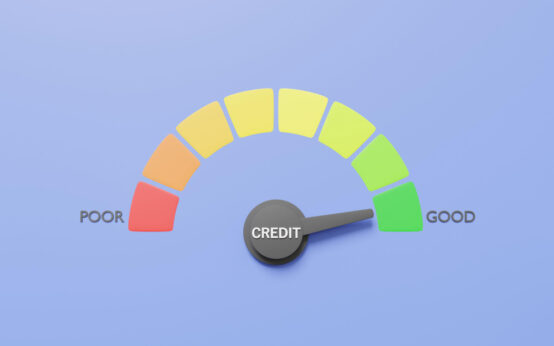 Discover the impact of credit score ranges on your finances <p class='sec-title' style='line-height: normal; font-weight: normal;font-size: 16px !important; text-align: left;margin-top: 8px;margin-bottom: 0px !important;'>Uncover the credit score ranges and enhance your financial opportunities!</p>
  How to make money online: 4 ways without leaving home <p class='sec-title' style='line-height: normal; font-weight: normal;font-size: 16px !important; text-align: left;margin-top: 8px;margin-bottom: 0px !important;'>Learn how to make money online intelligently and work from anywhere with total freedom!</p>
  The importance of enterprise value in evaluating business worth <p class='sec-title' style='line-height: normal; font-weight: normal;font-size: 16px !important; text-align: left;margin-top: 8px;margin-bottom: 0px !important;'>Market cap is useful, but enterprise value is the more accurate tool for understanding a company’s total worth.</p>